Sitting in stop-and-go Dubai traffic during summer is one of the toughest tests a car’s cooling system can face. Knowing how to read a cooling system warning early gives you the chance to pull over safely and avoid serious engine damage, instead of finding out your car is overheating only when steam is already pouring from the hood.
This guide breaks down the early signs your cooling system gives you, what they mean, and exactly what to do before a manageable warning turns into a roadside breakdown.
How to Read a Cooling System Warning
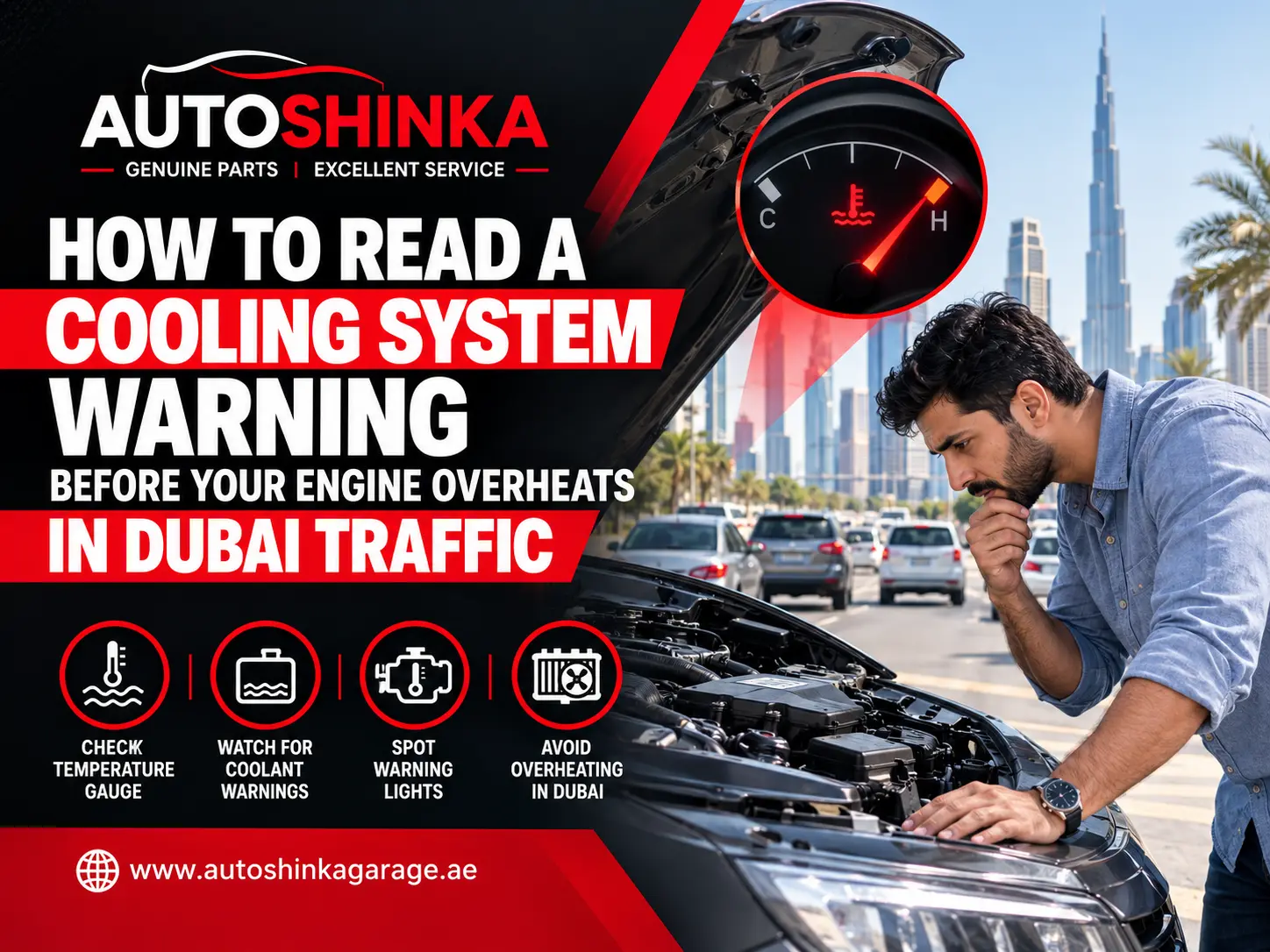
The fastest way to understand how to read a cooling system warning is to watch three things: your temperature gauge, your dashboard warning lights, and any unusual smells or sounds coming from the engine bay. A rising temperature needle, a coolant or engine temperature warning light, or a sweet smell inside the cabin are all early signals that your cooling system needs attention right away.
Catching any one of these signs early and pulling over safely is almost always enough to prevent serious damage. Continuing to drive once the temperature gauge is in the red zone is what turns a simple fix into an expensive engine repair.
Watching Your Temperature Gauge in Dubai Traffic
Your temperature gauge is the most direct window into your engine’s cooling performance, and it’s worth glancing at regularly, especially during slow-moving summer traffic. Under normal conditions, the needle should sit comfortably in the middle of the gauge and stay fairly stable during your drive.
If you notice the needle climbing steadily toward the red zone, particularly while idling in traffic, this is an early sign your cooling system is struggling to keep up. Dubai’s combination of high ambient heat and stop-and-go driving makes this one of the most common overheating triggers drivers experience.
Dashboard Warning Lights You Shouldn’t Ignore
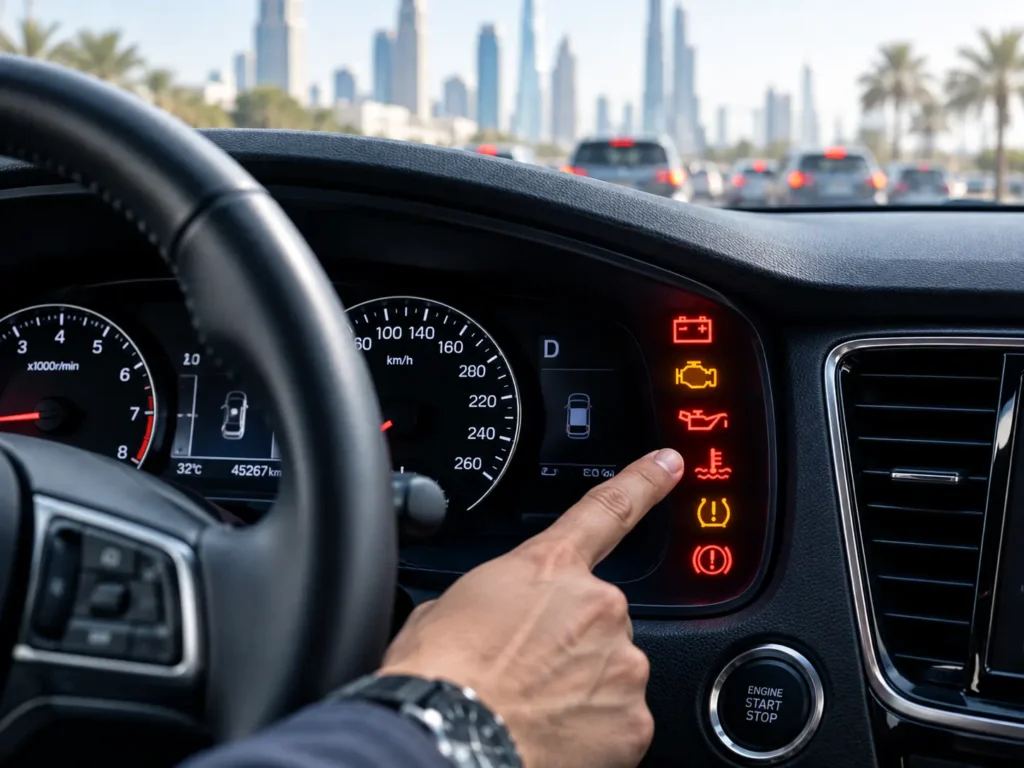
Modern cars are equipped with dashboard alerts specifically designed to flag cooling system issues before they become dangerous. Learning to recognize these lights is a core part of how to read a cooling system warning correctly.
- Coolant temperature warning light – often shaped like a thermometer in liquid, indicating the engine is running hotter than normal.
- Check engine light – can sometimes be triggered by cooling system sensor faults.
- Coolant level warning light – appears when fluid levels drop below the safe threshold.
- Battery or charging system light – occasionally linked to a failing water pump if it’s belt-driven.
Unusual Smells and Sounds That Signal Trouble
Beyond the dashboard, your senses can pick up early warning signs before the gauge even moves. A sweet smell inside or outside the car often points to a coolant leak, since most coolant has a distinctly sweet scent.
- A sweet, syrupy smell, often a sign of a coolant leak
- Steam or vapor visible from under the hood
- A ticking or knocking noise from the engine
- A hissing sound, which can indicate pressure escaping from a hose or the radiator
Any of these signs alongside a rising temperature gauge should be treated as a clear signal to stop driving and let the engine cool down.
Common Causes of Cooling System Warnings
Understanding what typically causes these warnings helps put the signs into context. Several factors tend to be behind most cooling system issues seen on Dubai roads.
- Low coolant levels due to a slow leak from hoses, the radiator, or the water pump
- A failing thermostat that doesn’t regulate temperature correctly
- A clogged or damaged radiator restricting airflow and cooling
- A failing radiator fan, especially noticeable during slow traffic
- Old, degraded coolant that has lost its ability to protect against heat
Because heat and constant traffic accelerate wear on these components, Dubai vehicles often need cooling system services more frequently than cars in milder climates.
Cooling System Warning Signs at a Glance
Here’s a simplified reference table connecting each sign to its likely cause and next step.
| Warning Sign | Likely Cause | What to Do |
| Rising temperature gauge | Low coolant or failing thermostat | Pull over, let engine cool |
| Coolant warning light | Low fluid or sensor fault | Check coolant level once cooled |
| Sweet smell | Coolant leak | Inspect hoses and radiator |
| Steam from hood | Overheating in progress | Stop driving immediately |
| Hissing sound | Pressure loss from hose or radiator | Professional inspection needed |
| Ticking or knocking noise | Engine running too hot | Stop driving, seek repair |
What to Do If Your Cooling System Warning Appears While Driving
If you notice any of these warning signs while driving, especially in heavy Dubai traffic, follow these steps to protect your engine.
- Turn off the air conditioning to reduce load on the engine.
- Find a safe place to pull over as soon as possible.
- Turn off the engine and let it cool for at least 15 to 20 minutes.
- Never open the radiator cap while the engine is hot, as pressurized coolant can cause serious burns.
- Once cooled, check coolant levels if you’re able to do so safely.
- If the issue persists or you’re unsure, call for professional roadside assistance or towing.
Following these steps in order significantly reduces the risk of turning a warning sign into a full engine failure.
The 3-Sense Cooling Check: The Autoshinka Framework
To make it easier to catch cooling system warnings early, we recommend using your three senses during every drive, especially in traffic.
- See – Check the temperature gauge and watch for any dashboard warning lights.
- Smell – Notice any sweet or unusual smells inside or around the vehicle.
- Hear – Listen for hissing, ticking, or knocking sounds from the engine.
Making this a habit, especially during Dubai’s hotter months, helps you catch a cooling system warning long before it becomes an emergency.
Why Dubai’s Climate Makes Cooling System Care Essential
Extreme summer temperatures, combined with dense traffic that keeps engines running at low speeds for extended periods, place far more stress on cooling systems here than in cooler regions. Components like the radiator, water pump, and thermostat work harder and wear out faster under these conditions.
This is why regular cooling system services and proactive radiator repair Dubai drivers rely on are not just recommended but genuinely necessary for keeping a vehicle safe and reliable through the hottest months of the year.
Getting Professional Help Before or After a Warning Sign
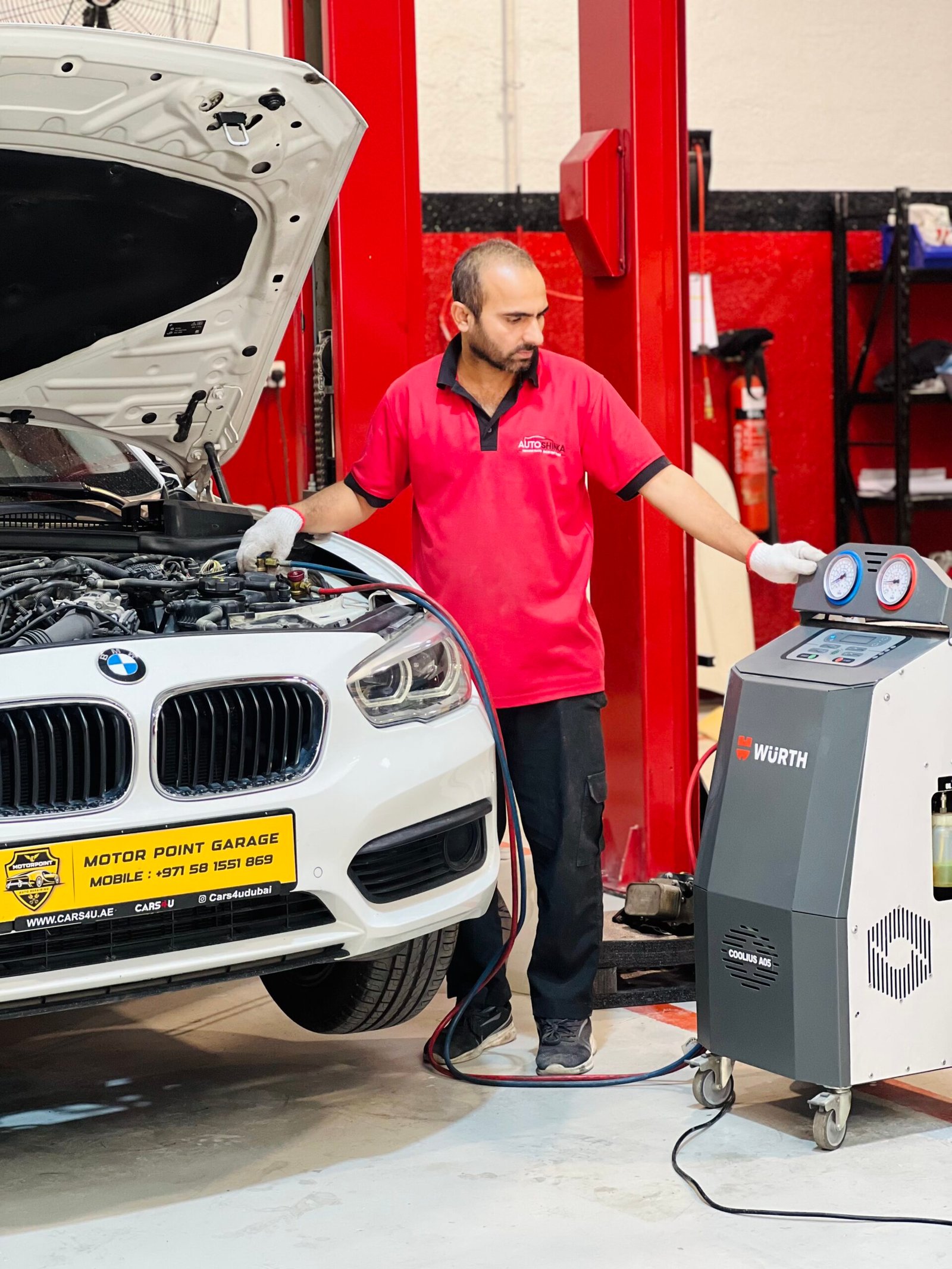
Whether you’ve noticed an early warning sign or your engine has already overheated, getting the right professional help matters. At Autoshinka Car Service Centre, our technicians specialize in engine overheating repair, using proper diagnostic tools to identify the exact cause rather than replacing parts unnecessarily.
As an experienced car overheating repair specialist, we assess the radiator, water pump, thermostat, hoses, and coolant condition together, since these components are closely linked and a fault in one often affects the others.
Frequently Asked Questions
1. What should I do immediately if my car overheats in traffic?
Turn off the air conditioning, pull over safely as soon as possible, and switch off the engine to let it cool for at least 15 to 20 minutes. Avoid opening the radiator cap while the engine is hot, as this can cause serious burns from pressurized coolant.
2. Can I keep driving if my temperature gauge is slightly high but not in the red?
It’s safer to pull over and check your coolant level rather than continuing to drive, even if the gauge hasn’t reached the red zone yet. A gauge trending upward is often an early warning that’s easier and cheaper to address before it becomes a full overheating event.
3. How often should I have my cooling system checked in Dubai?
Given Dubai’s extreme heat, having your cooling system checked at every routine service, or roughly every 10,000 to 12,000 kilometers, is a sensible approach. Vehicles that regularly sit in heavy traffic may benefit from more frequent checks during the summer months.
Catching the Warning Before It Becomes an Emergency
Knowing how to read a cooling system warning is one of the simplest ways to protect your engine and avoid being stranded in Dubai’s heat. Paying attention to your temperature gauge, dashboard lights, and any unusual smells or sounds gives you the time you need to act before serious damage occurs.
Noticed an early cooling system warning on your car?
Book an inspection with Autoshinka Car Service Centre and let our technicians catch the issue before it leads to a breakdown. Contact us to schedule your appointment today.