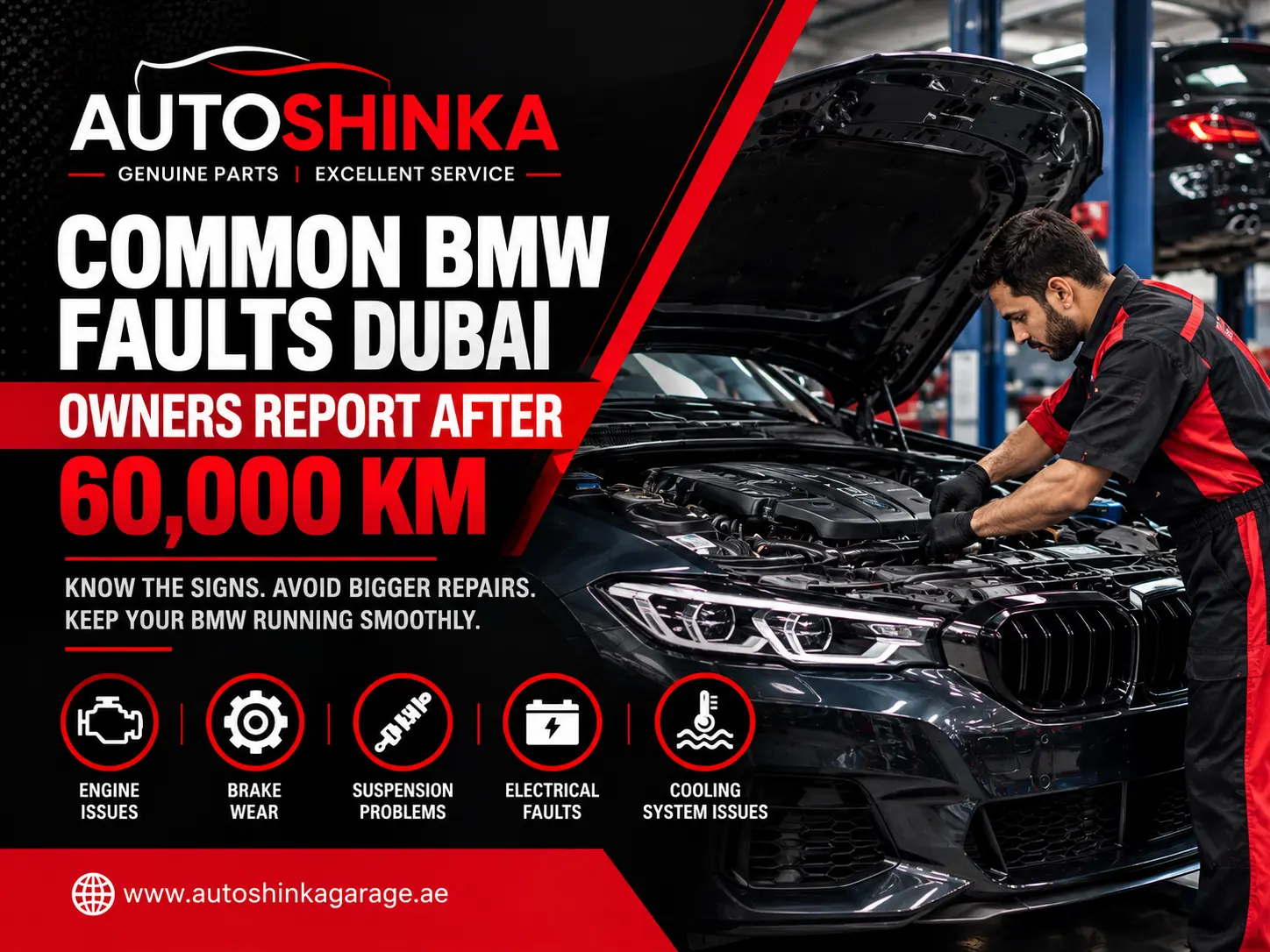
Once a BMW crosses the 60,000 kilometer mark, certain components start to show their age, especially under Dubai’s demanding heat and traffic conditions. Knowing the common BMW faults that tend to appear around this mileage helps owners catch problems early, before a manageable repair turns into a major mechanical failure.
This guide walks through the systems most likely to need attention after 60,000 km, why Dubai’s climate accelerates the process, and how to keep your BMW running reliably for years to come.
Common BMW Faults After 60,000 KM
At a high level, the common BMW faults reported around and after 60,000 km tend to cluster around a handful of systems. These include cooling system components like the water pump and thermostat, oil leaks from valve cover gaskets and oil filter housings, electrical faults, worn suspension bushings, and increased wear on turbocharger-related components on turbocharged models.
None of these issues are unique to BMW, they’re common across many performance-oriented, electronics-heavy vehicles once they pass higher mileage thresholds. What sets BMW ownership apart is that these components are often more expensive to source and repair than on mainstream brands, making early detection especially valuable.
Cooling System Issues: Water Pumps and Thermostats
Cooling system components are among the most frequently discussed BMW faults once a vehicle passes 60,000 km, particularly on models where the water pump uses plastic components that degrade faster under sustained heat. In Dubai’s climate, where ambient temperatures regularly push cooling systems to their limits, this wear tends to show up sooner than it might in cooler regions.
Warning signs include a rising temperature gauge, coolant warning lights, or a sweet smell suggesting a coolant leak. Left unaddressed, a failing water pump or thermostat can lead to overheating, which risks much more serious and costly engine damage.
Oil Leaks From Gaskets and Seals
As rubber and gasket materials age, it’s common for BMWs past 60,000 km to develop small oil leaks, most often from the valve cover gasket, oil filter housing gasket, or oil pan seals. These leaks often start slowly and are easy to miss until oil spots appear under the car or the engine bay starts to smell of burning oil.
High under-hood temperatures in Dubai can accelerate the breakdown of these seals compared to milder climates. Catching a leak early usually means a straightforward gasket replacement, while ignoring it can lead to low oil levels and increased engine wear.
Electrical and Sensor Faults
BMWs are known for a high level of onboard electronics, from sensors and control modules to advanced driver-assist features, and this complexity means electrical faults become more noticeable as the vehicle ages. Common symptoms include dashboard warning lights that appear intermittently, issues with power windows or central locking, and occasional battery drainage.
Extreme heat can also affect battery performance and put extra strain on electrical connectors over time. A proper diagnostic scan is usually the fastest way to identify whether an issue is a simple sensor fault or something more significant.
Suspension and Steering Component Wear
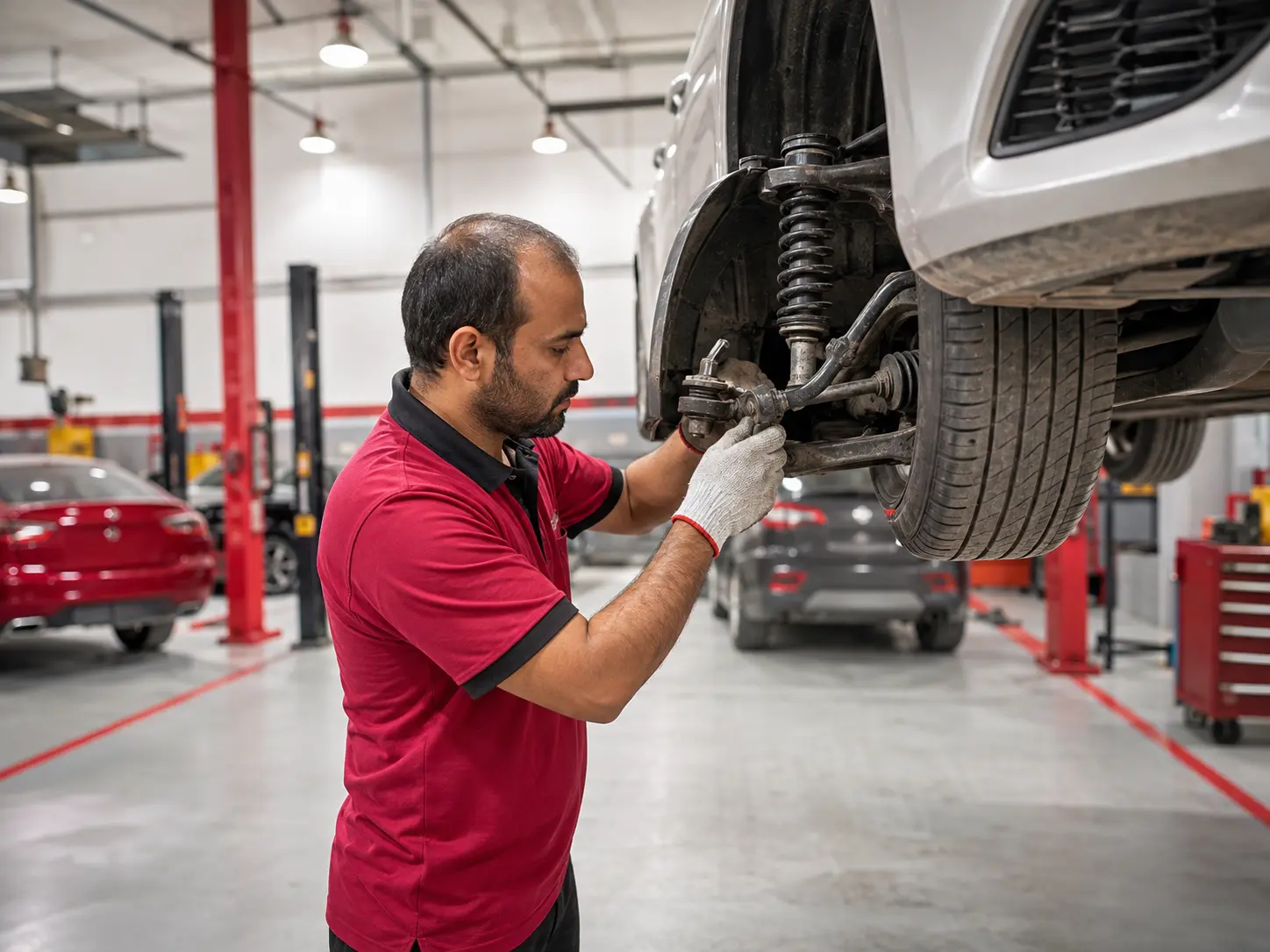
Suspension bushings, control arms, and steering components naturally wear out over time, and this wear becomes more apparent after 60,000 km, especially on cars that regularly encounter Dubai’s speed bumps and uneven road surfaces. Symptoms include clunking noises over bumps, a looser feeling in the steering, and uneven tyre wear.
Because BMW places a strong emphasis on precise handling, even minor suspension wear can be more noticeable in ride quality compared to other vehicle types. Addressing these issues promptly helps maintain both comfort and the vehicle’s signature driving feel.
Turbocharger-Related Wear on Turbocharged Models
Many modern BMW engines rely on turbocharging for performance, and while generally reliable, turbocharged components do experience more wear under sustained high-load driving, such as frequent highway acceleration or heavy traffic idling in extreme heat. Common signs include a whistling or whining noise under acceleration, reduced power delivery, or increased oil consumption.
Regular oil changes using the correct specification oil play a significant role in protecting turbocharger components, making consistent car repair and maintenance especially important on turbocharged models.
BMW Fault Overview: Common Issues After 60,000 KM
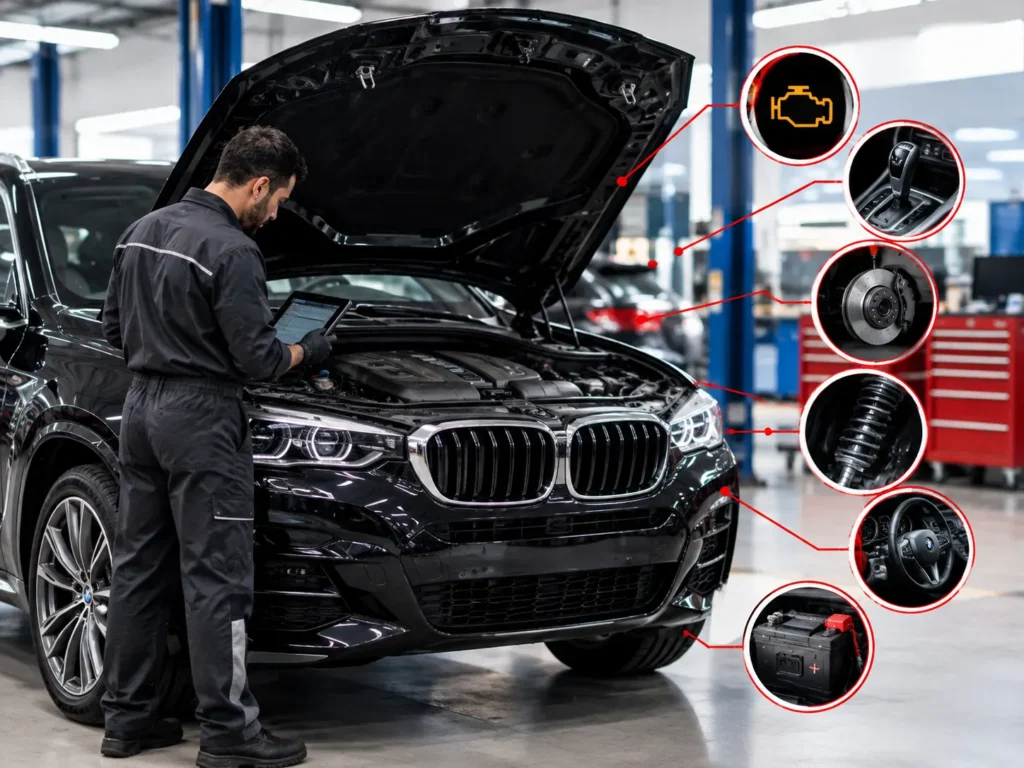
Here’s a quick reference table summarizing what to watch for and the typical fix.
| System | Common Fault | Typical Fix |
| Cooling system | Water pump or thermostat wear | Component replacement |
| Engine seals | Valve cover or oil filter housing leaks | Gasket replacement |
| Electrical system | Sensor faults, battery drainage | Diagnostic scan and repair |
| Suspension | Worn bushings or control arms | Component replacement |
| Turbocharger | Reduced power, unusual noise | Inspection and repair |
Why Dubai’s Climate Accelerates These Faults
High ambient temperatures, heavy traffic, and long highway drives all place additional stress on a BMW’s cooling, sealing, and electrical systems compared to milder climates. Components rated for standard conditions can wear faster when consistently exposed to extreme heat, especially plastic and rubber parts throughout the engine bay.
This is why BMWs in Dubai often benefit from closer monitoring past the 60,000 km mark than the same models might need elsewhere, and why proactive inspections matter more here than in cooler regions.
The 4-System Scan: The Autoshinka Framework
To keep track of the areas most likely to need attention on a higher-mileage BMW, we recommend checking these four systems at every service visit.
- Cooling – coolant level, water pump condition, and thermostat function
- Seals – visual check for oil leaks around gaskets and housings
- Electrical – battery health and any stored diagnostic fault codes
- Suspension – bushing condition and any unusual noise over bumps
Running through this checklist consistently helps catch developing issues before they turn into a breakdown.
Why Choose a Specialized BMW Garage in Dubai
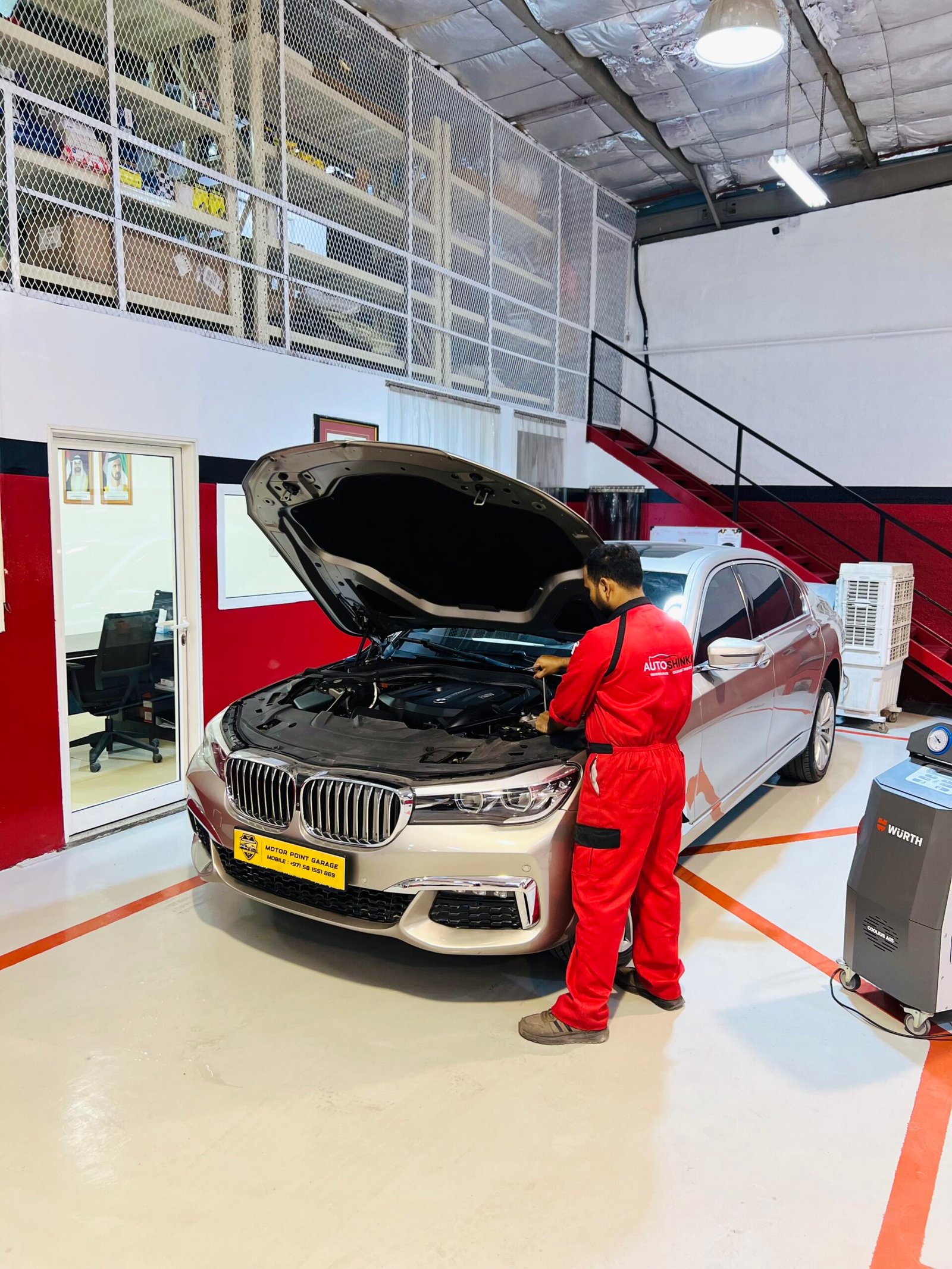
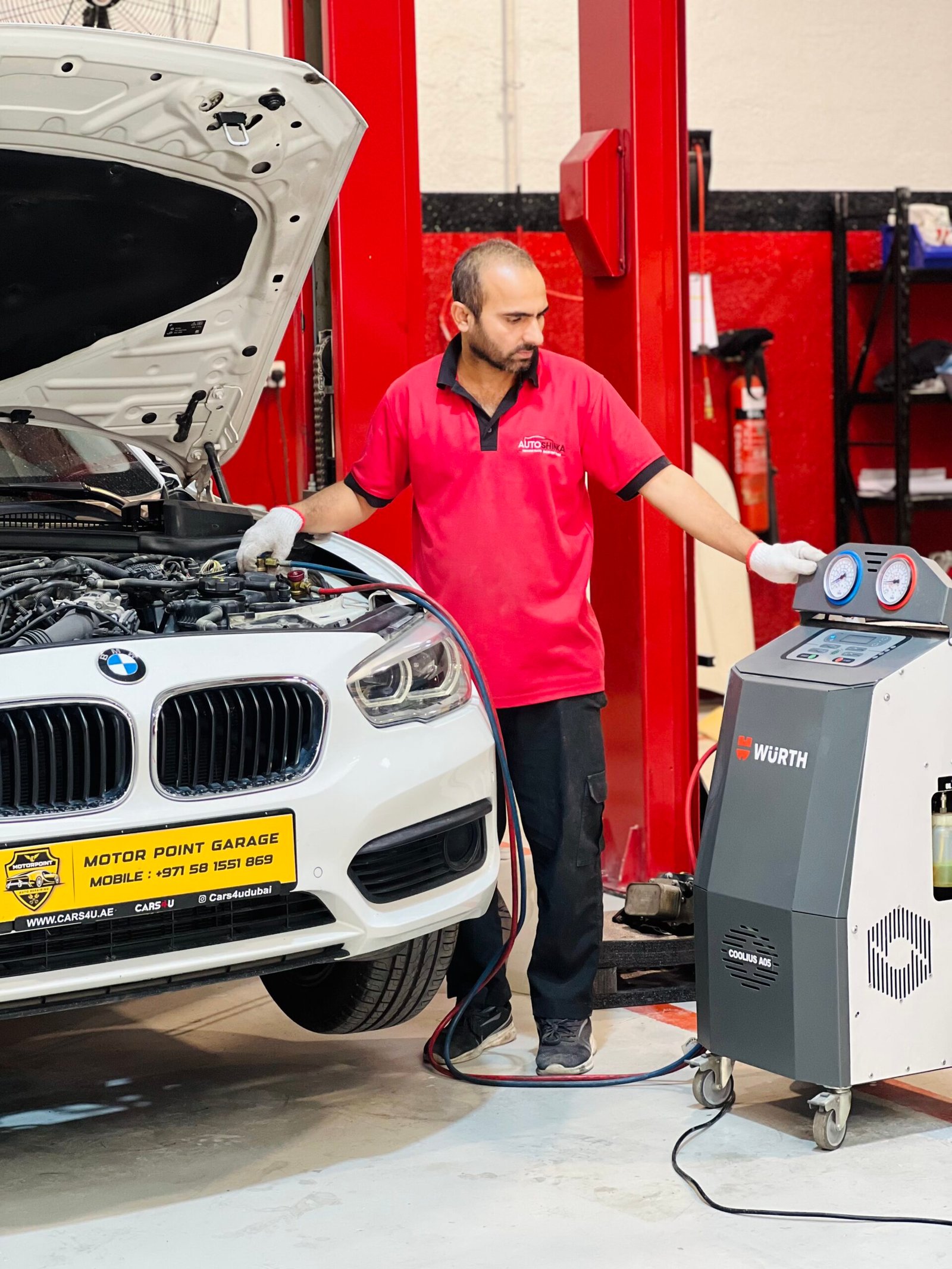
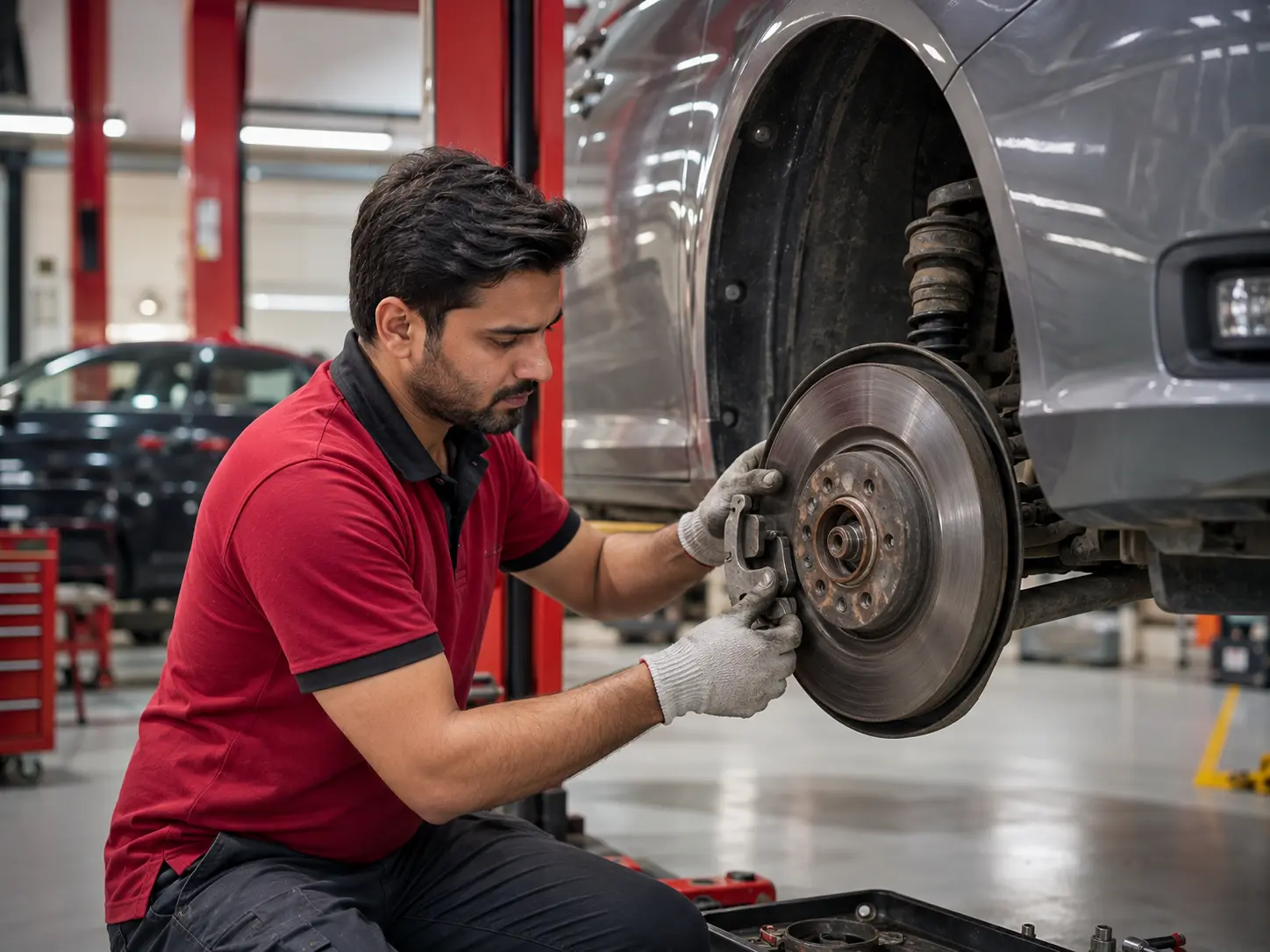
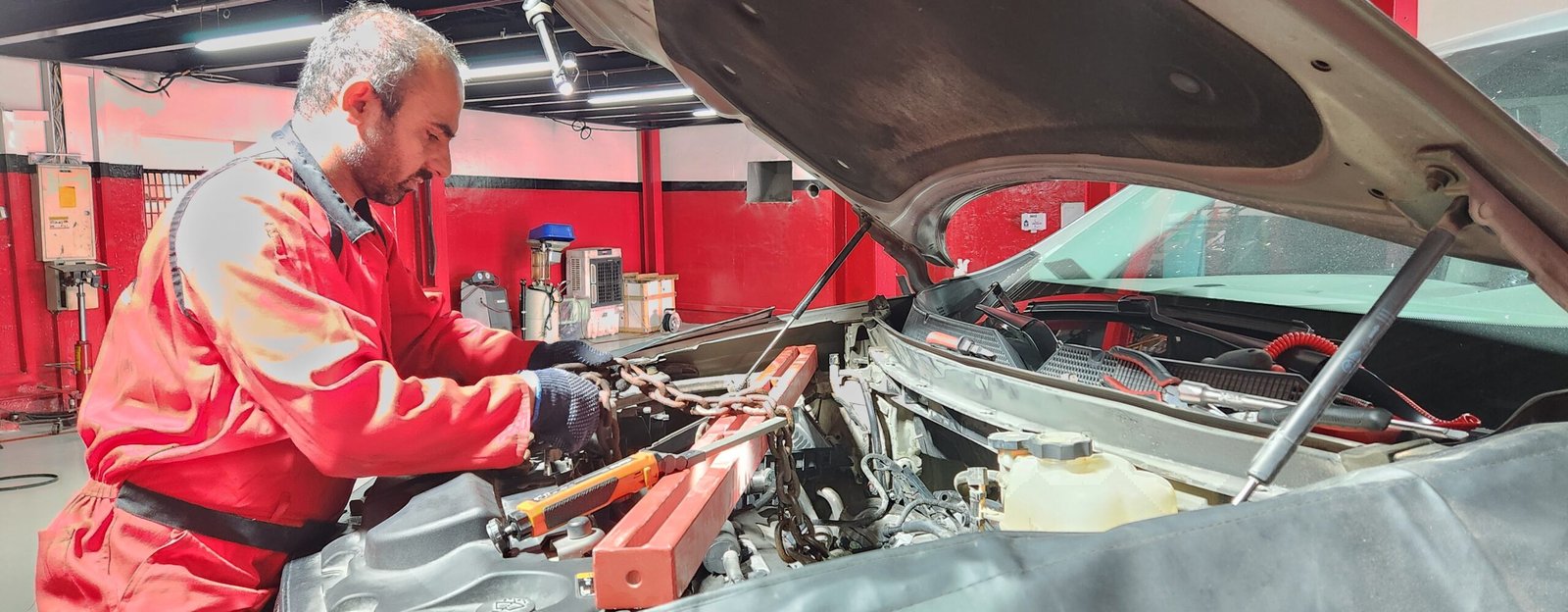
Servicing a higher-mileage BMW properly requires the right diagnostic tools and technicians familiar with BMW-specific systems and common failure points. A trusted BMW garage Dubai owners can rely on should be able to accurately diagnose these issues rather than replacing parts by guesswork.
At Autoshinka Car Service Centre, we provide thorough BMW car repair Dubai drivers trust, combining proper diagnostics with transparent pricing, so you know exactly what’s being repaired and why. Our goal is to help BMW owners maintain performance and reliability without unnecessary dealership costs.
Frequently Asked Questions
1. Is 60,000 km a lot for a BMW?
60,000 km is a moderate mileage for a BMW, and most models are built to handle well beyond this with proper maintenance. It’s a common point where certain wear-related components, like seals and cooling system parts, start to need closer attention.
2. How much does it cost to fix common BMW faults?
Costs vary depending on the specific fault, ranging from an affordable gasket replacement to a more significant repair for cooling system or turbocharger components. Getting an accurate diagnosis first helps avoid paying for unnecessary parts or labor.
3. Should I service my BMW at an independent garage or the dealership?
An independent BMW service Dubai workshop with proper diagnostic equipment and BMW-specific experience can service your vehicle just as effectively as a dealership, often at a more affordable rate. It’s important to choose a garage with genuine BMW expertise rather than a general workshop.
Staying Ahead of BMW Faults
Understanding the common BMW faults that tend to appear after 60,000 km puts you in a much better position to catch issues early and avoid costly repairs. Regular inspections focused on cooling, seals, electrical systems, and suspension go a long way toward keeping a higher-mileage BMW reliable in Dubai’s demanding conditions.
Noticed any early warning signs on your BMW?
Book a diagnostic inspection with Autoshinka Car Service Centre and let our technicians catch the issue before it becomes a bigger repair. Contact us to schedule your appointment today.