Seeing a cloud of smoke trailing behind your car is alarming, and the color tells you a lot. White smoke from a car exhaust can be completely harmless, such as thin vapor on a cool morning, or a warning sign of a serious engine problem like a coolant leak. The difference comes down to how thick it is, how long it lasts, and what else your car is doing.
This guide explains the main causes, how to tell normal vapor from a real problem, and what to do next if you see it on Dubai’s roads.
White Smoke From a Car Exhaust
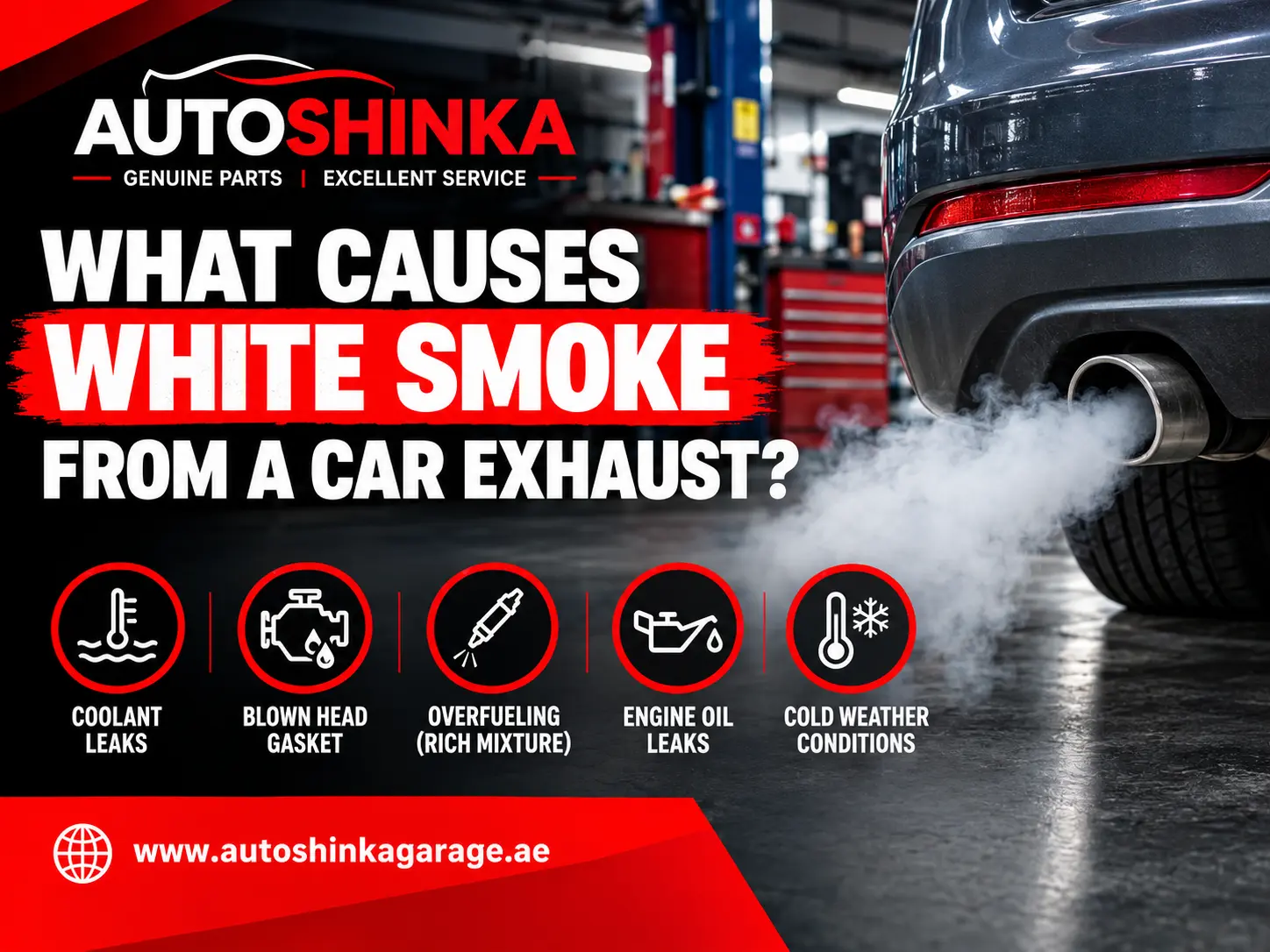
The most common causes of white smoke from a car exhaust are normal condensation, burning coolant from a leak into the engine, and, on diesel engines, unburned fuel. Thin white vapor that disappears within a minute or two is usually just condensation. Thick, persistent white smoke with a sweet smell usually means coolant is entering the engine, which needs prompt attention.
If the smoke is thick and does not clear once the engine warms up, do not ignore it. Early diagnosis can be the difference between a manageable repair and a ruined engine.
Normal White Vapor vs. Warning-Sign Smoke
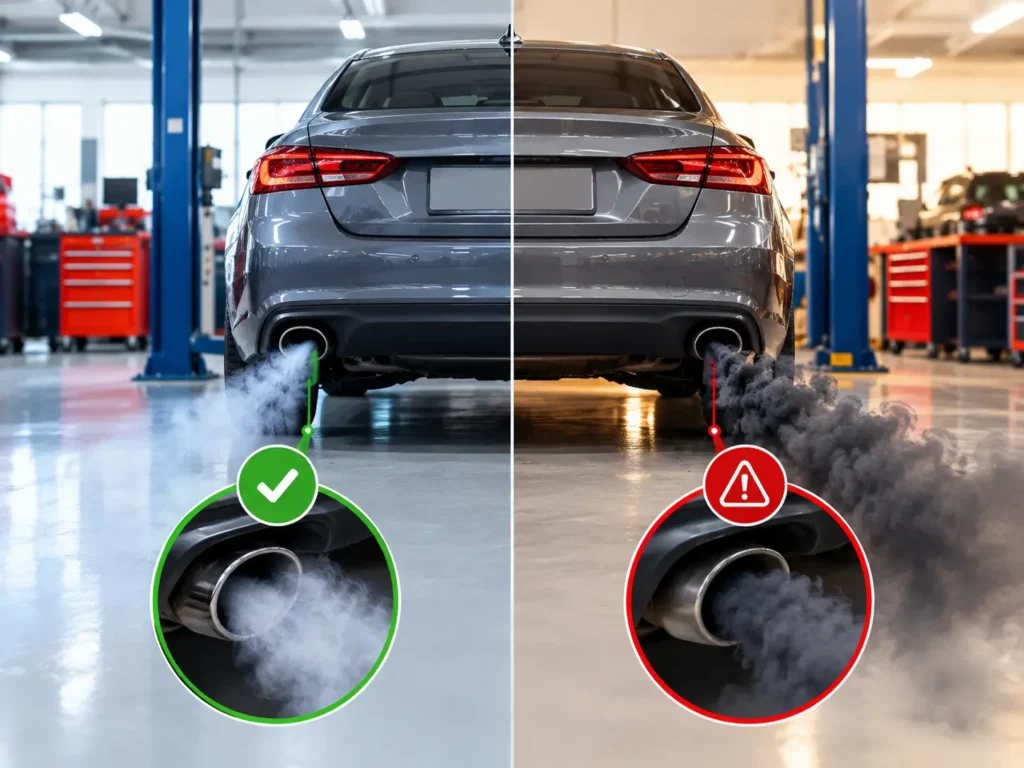
Not all white exhaust is a problem. Your exhaust system naturally produces water vapor as a by-product of burning fuel, and when the exhaust pipe is cold, that vapor condenses into a visible white cloud.
Normal vapor is thin, smells like regular exhaust, and fades within a few minutes as the system warms. Warning-sign smoke is thick, lingers, and often has a sweet or unusual smell. This difference is the most useful first clue.
Cause 1: Normal Condensation
When the engine starts, the exhaust pipe and silencer are cold, so water vapor condenses and appears as thin white mist. You may also see small drips of clear water from the tailpipe.
In Dubai, this is most noticeable on cooler winter mornings or on humid days. If the smoke fades quickly and the car drives normally, there is usually nothing to worry about.
Cause 2: Coolant Burning in the Engine
This is the most serious common cause. If coolant leaks into the combustion chamber, it burns and creates thick white smoke with a distinctly sweet smell.
The usual culprits include:
- A failed head gasket, the seal between the engine block and cylinder head
- A cracked cylinder head or engine block
- A leaking intake manifold gasket on some engine designs
Because the cooling system then loses fluid, you may also see low coolant levels or rising temperatures.
Cause 3: Overheating Damage
Dubai’s extreme heat and heavy traffic make overheating one of the most common triggers for head gasket failure. Running a car with a weak cooling system, low coolant, or a faulty radiator fan raises the risk.
An engine that has overheated once can develop a gasket leak later, even after the temperature gauge returns to normal. That is why any overheating event deserves a proper inspection rather than a quick top-up.
Cause 4: Unburned Fuel (Mostly Diesel Engines)
On diesel engines, white or pale smoke on a cold start can come from fuel that is not burning completely. Possible reasons include faulty injectors, low compression, or a problem with the glow plugs that help diesels start.
Occasional light smoke on a cold start may be minor, but ongoing smoke with rough running, poor power, or heavy fuel use should be checked by a technician.
Cause 5: Other Less Common Sources
Other causes are less frequent but still worth knowing. Some older automatic transmissions can draw transmission fluid into the engine through a faulty component, producing whitish smoke and a different smell from coolant.
A blocked or damaged exhaust system can also change how exhaust gases flow. If you suspect this, professional exhaust system repair is the right next step.
White Smoke Causes at a Glance
Here is a quick reference to help you compare the signs.
| Cause | Smoke Appearance | Other Clues | Urgency |
| Normal condensation | Thin, fades quickly | Clear water drips, normal running | Low |
| Burning coolant | Thick, persistent, sweet smell | Low coolant, overheating | High |
| Overheating damage | Thick white smoke | Temperature spikes, steam | High |
| Unburned fuel (diesel) | Pale, mainly cold starts | Rough idle, weak power | Medium |
| Transmission fluid issue | Whitish, different smell | Gear shift problems | Medium to high |
The 3-Check Smoke Test: The Autoshinka Framework
Before calling a garage, run this simple check so you can describe the problem clearly.
- Thickness – Is the smoke thin and quick to fade, or thick and lingering?
- Smell – Is it a normal exhaust smell, or sweet and syrupy like coolant?
- Timing – Does it only appear on cold starts, or does it continue once the engine is warm?
If the smoke is thick, sweet-smelling, and continues after warming up, treat it as urgent.
Other Warning Signs to Watch For
White smoke rarely appears alone when something is wrong. Look out for these accompanying symptoms.
- A temperature gauge climbing higher than usual
- Coolant level dropping without any visible leak
- Milky, light-brown residue under the oil filler cap
- White deposits or wet marks near the tailpipe
- Rough idling, misfires, or loss of power
- A sweet smell inside or around the car
If you see two or more of these along with thick white smoke, avoid driving the car and arrange an inspection.
What to Do If You See White Smoke
Follow these steps to protect your engine and your safety.
- Check whether the smoke is thin and fading or thick and persistent.
- If the temperature gauge is rising, pull over safely and switch off the engine.
- Let the engine cool completely before checking anything under the hood.
- Never open the radiator cap on a hot engine, as pressurized coolant can cause serious burns.
- Once cool, check the coolant level and look for obvious leaks.
- If smoke is thick or coolant is low, arrange a professional inspection instead of driving further.
Can You Keep Driving With White Smoke?
If the smoke is thin and disappears quickly, you can generally keep driving normally. If it is thick, continues once warm, or comes with overheating, it is safer to stop.
Driving with a coolant leak into the engine can quickly cause serious internal damage, which can turn a gasket repair into a far more expensive engine job. When in doubt, a short tow is cheaper than a new engine.
How Preventive Maintenance Helps
Many white smoke problems start with cooling system neglect. Regular coolant checks, radiator inspections, and timely replacement of worn hoses and belts go a long way.
Good preventive maintenance for your car, including regular fluid checks and cooling system inspections, helps catch small leaks before they damage the engine. In Dubai’s heat, this matters more than in cooler climates.
Getting Professional Help in Dubai
An accurate diagnosis matters because several different faults can look similar from the outside. Technicians use tools such as pressure testers and exhaust gas checks to find the real cause rather than guessing.
At Autoshinka Car Service Centre, we offer affordable car repair service backed by proper diagnostics, covering cooling system faults, engine checks, and exhaust system repair. As an experienced car repair garage, we also handle exhaust repair Dubai drivers rely on, from leaks and damaged pipes to broader automotive exhaust repair.
Frequently Asked Questions
1. Is white smoke from the exhaust always bad?
No. Thin white vapor that fades within a minute or two is usually harmless condensation, especially on cooler or humid mornings. Thick, lingering white smoke with a sweet smell is a warning sign and should be inspected promptly.
2. Can I drive my car if white smoke is coming from the exhaust?
If the smoke is thin and quickly fades, normal driving is generally fine. If it is thick, continues once the engine is warm, or comes with overheating, stop driving and have the car inspected to avoid serious engine damage.
3. What causes thick white smoke and low coolant?
This combination usually points to coolant entering the engine, most often through a failed head gasket or a cracked cylinder head. It needs a professional diagnosis, since the repair depends on exactly where the leak is.
Read the Smoke, Protect the Engine
White smoke from a car exhaust is not always a crisis, but it should never be ignored when it is thick, persistent, or sweet-smelling. Checking thickness, smell, and timing gives you a quick way to tell harmless vapor from a real problem, and acting early keeps repair costs down.
Seeing smoke you can’t explain?
Book an inspection with Autoshinka Car Service Centre and let our technicians find the cause before it becomes a breakdown. Contact us to schedule your appointment today.