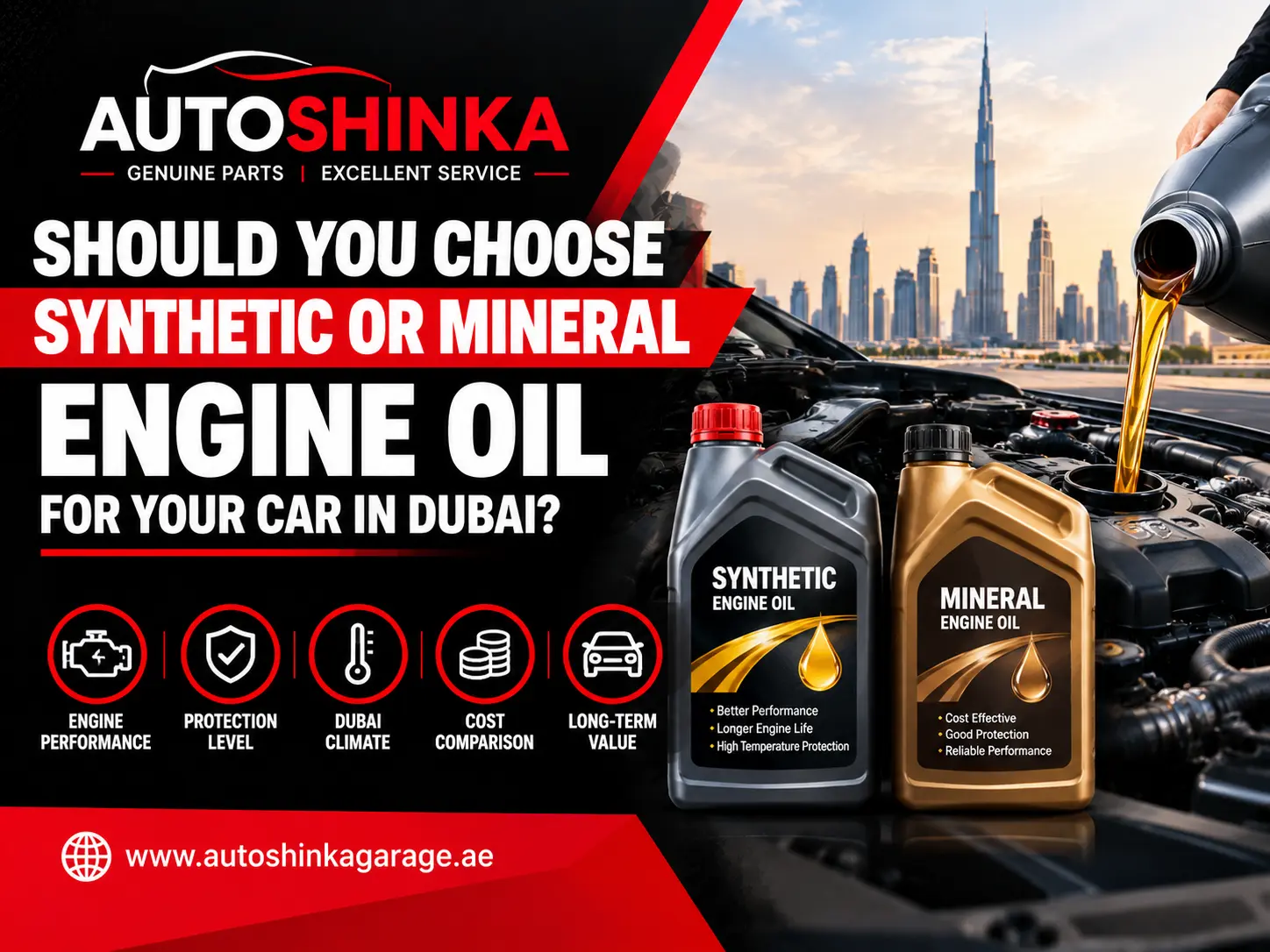
Choosing the right engine oil is one of the most important decisions you’ll make for your car’s long-term health, and it’s a question we get asked constantly at our workshop. Whether to choose synthetic or mineral engine oil depends on a mix of factors, including your car’s age, how you drive, and importantly, the extreme heat that Dubai’s climate puts on your engine.
This guide breaks down the real differences between the two, how each performs under Dubai’s conditions, and how to decide which one is right for your vehicle.
Choose Synthetic or Mineral Engine Oil
For most drivers in Dubai, synthetic oil is generally the better choice because it resists heat better, lasts longer, and protects better under high-temperature, stop-and-go driving. Mineral oil, however, can still be a reasonable and more affordable option for older, simpler engines that don’t require the higher performance standards synthetic oil provides.
The decision to choose synthetic or mineral engine oil ultimately comes down to your specific car, its age, mileage, and how it’s driven day to day. The sections below break down exactly what separates the two options.
What’s the Difference Between Synthetic and Mineral Oil?
Mineral oil is refined directly from crude oil with minimal processing, making it the more basic, traditional option that’s been used in engines for decades. Synthetic oil, on the other hand, is chemically engineered to have a more uniform molecular structure, which gives it more consistent performance across a wider range of temperatures.
This structural difference is what drives most of the performance gap between the two. Synthetic oil generally flows better in extreme heat, breaks down more slowly, and leaves fewer deposits inside the engine over time compared to mineral oil.
Why Heat Resistance Matters More in Dubai
Dubai’s summer temperatures regularly push engine bay temperatures far higher than in milder climates, and this is where the difference between synthetic and mineral oil becomes most noticeable. Mineral oil tends to break down faster under sustained high heat, losing viscosity and protective qualities sooner than synthetic alternatives.
Synthetic oil is specifically engineered to maintain its protective properties across a wider temperature range, making it more resistant to the kind of heat-related breakdown that’s common in UAE driving conditions. For drivers who spend a lot of time in traffic or on long highway stretches during summer, this heat resistance can make a meaningful difference in engine protection.
Engine Protection and Longevity
Beyond heat resistance, synthetic oil generally provides better lubrication at both high and low temperatures, reducing friction between moving engine parts. This can translate into less wear over time, particularly for engines that work hard in stop-and-go traffic or under heavy loads.
- Better protection during engine startup, when wear is highest
- Reduced buildup of sludge and deposits inside the engine
- More consistent lubrication across a wider temperature range
- Generally longer intervals between oil changes compared to mineral oil
Mineral oil still offers reasonable protection for many engines, particularly older or simpler designs, but it typically requires more frequent changes to maintain the same level of performance.
Synthetic vs Mineral Oil Comparison Table
Here’s a side-by-side comparison to help clarify the key differences between the two.
| Feature | Synthetic Oil | Mineral Oil |
| Heat resistance | High | Moderate |
| Typical change interval | Longer | Shorter |
| Cost per change | Higher | Lower |
| Performance in extreme heat | Strong | Weaker |
| Engine deposit buildup | Lower | Higher |
| Best suited for | Most modern engines, high-heat conditions | Older, simpler engines |
Cost Considerations: Synthetic vs Mineral Oil
Synthetic oil typically costs more upfront than mineral oil, which is often the main reason drivers hesitate to choose it. However, synthetic oil generally allows for longer intervals between changes, which can help offset some of the cost difference over time.
Choosing an affordable car repair service that’s transparent about pricing for both oil types helps you weigh the upfront cost against the long-term protection benefits, rather than automatically defaulting to the cheaper option without considering your specific driving conditions.
Which Cars Benefit Most From Synthetic Oil?
While synthetic oil generally performs better across the board, certain vehicles and driving conditions benefit from it more noticeably. Newer engines, particularly those with turbochargers, are often designed with synthetic oil performance in mind and may specifically require it.
- Turbocharged engines, which run hotter and need better heat resistance
- High-mileage vehicles that benefit from reduced internal wear
- Cars regularly driven in heavy Dubai traffic or extreme heat
- Vehicles that tow, carry heavy loads, or are driven aggressively
If your car falls into any of these categories, synthetic oil is generally the more sensible choice, even with the higher upfront cost.
When Mineral Oil Might Still Make Sense
Despite synthetic oil’s advantages, mineral oil isn’t necessarily the wrong choice for every vehicle. Older, simpler engines that were designed before synthetic oil became widely available sometimes don’t see a significant performance benefit from switching.
For drivers with older vehicles driven mostly for short, low-intensity trips, mineral oil combined with more frequent oil changes can still provide adequate protection. That said, checking your specific engine’s requirements is always worth doing before deciding.
The 3-Factor Oil Decision
To help decide whether to choose synthetic or mineral engine oil, consider these three factors together rather than in isolation.
- Engine type – Is your engine turbocharged or a newer design that specifically calls for synthetic oil?
- Driving conditions – Do you regularly drive in Dubai’s heavy traffic and extreme summer heat?
- Vehicle age and mileage – Is your car older with simpler engine requirements, or newer with higher performance demands?
Weighing these three factors together, rather than choosing based on price alone, leads to a more informed decision for your specific vehicle.
Getting Professional Advice for Your Vehicle
While general guidelines help, the right oil choice ultimately depends on your specific vehicle’s manufacturer recommendations and your driving habits. A qualified technician can review your car’s requirements and driving pattern to recommend the most suitable option.
At Autoshinka Car Service Centre, our technicians assess each vehicle individually as part of routine car maintenance services, recommending the right oil type based on your engine, mileage, and how you actually drive, rather than applying a one-size-fits-all recommendation. This approach to preventive maintenance car care in Dubai helps extend engine life while keeping costs reasonable.
Frequently Asked Questions
1. Can I switch from mineral to synthetic oil without damaging my engine?
Yes, switching from mineral to synthetic oil is generally safe for most engines and won’t cause damage. It’s a common upgrade drivers make, particularly when moving to a newer or higher-performance vehicle.
2. Is synthetic oil really worth the extra cost?
For most drivers in Dubai’s heat, synthetic oil is generally worth the extra cost due to its better heat resistance, longer intervals between changes, and improved engine protection. The value becomes even clearer for turbocharged engines or vehicles driven frequently in heavy traffic.
3. How often should I change synthetic oil compared to mineral oil?
Synthetic oil typically allows for longer intervals between changes compared to mineral oil, though the exact figure depends on your vehicle and manufacturer recommendations. Checking your car’s specific service schedule is the most reliable way to confirm the right interval.
Final Word: Making the Right Choice for Your Car
Deciding whether to choose synthetic or mineral engine oil comes down to your engine type, how you drive, and Dubai’s demanding heat. For most modern vehicles and drivers facing regular traffic and extreme temperatures, synthetic oil offers meaningful protection that’s often worth the added cost.
Not sure which oil is right for your car?
Book a service with Autoshinka Car Service Centre and let our technicians recommend the best option for your vehicle. Contact us to schedule your appointment today.